
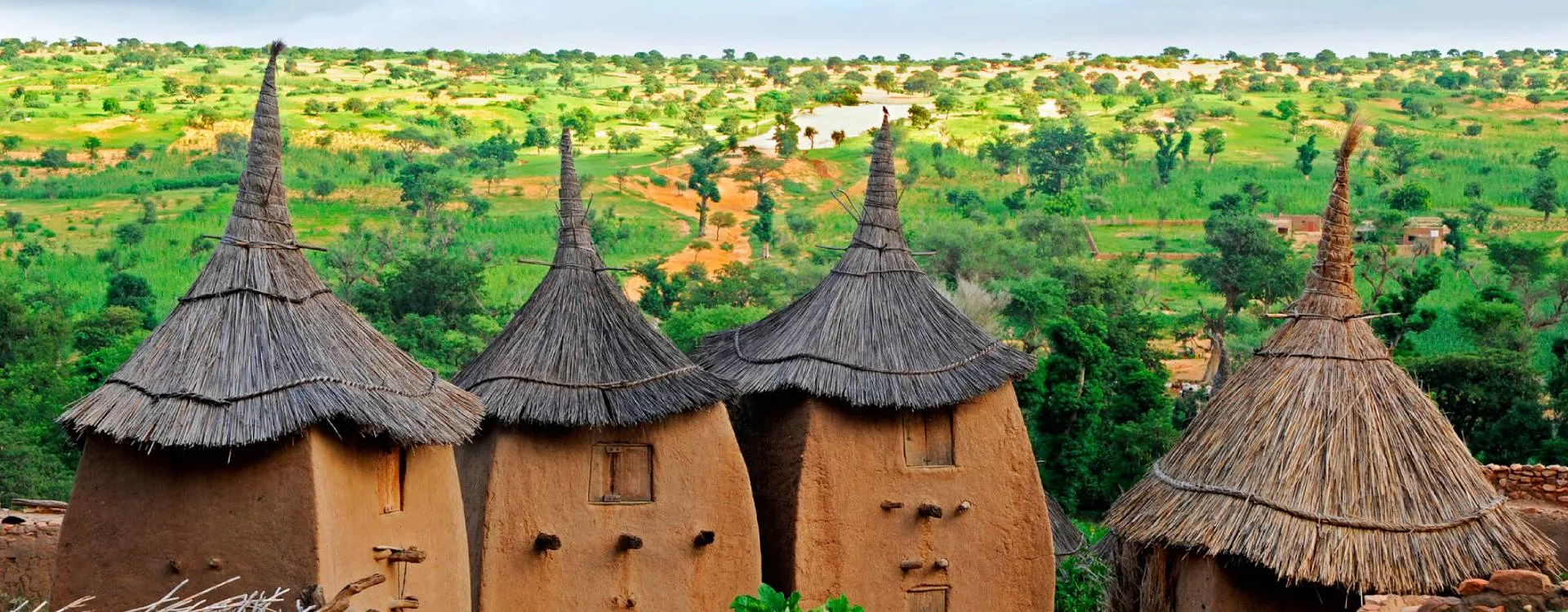
Holidays in Mali
About Mali
Discover the vibrant culture, stunning landscapes, and rich history of Mali, a country that offers a perfect blend of ancient and modern influences. With its legendary city of Timbuktu, stunning mud-brick mosques, and lively music scene, Mali offers endless opportunities for cultural immersion and adventure. Explore the historic streets of Bamako, trek through the stunning Dogon Country, or simply unwind in the picturesque Niger River towns.
Useful facts
- Time differenceGMT
- CurrencyWest African CFA franc (XOF)
- Population20.3 Million
- Visa requiredVisa Required
- Average daytime high35.1°
Things to do in Mali
Discover the rich cultural heritage and stunning landscapes of Mali, a fascinating nation in West Africa known for its ancient cities, vibrant music scene, and unique traditions. Begin your adventure in Bamako, the bustling capital city, where you can explore the lively markets, sample the delicious local cuisine, and visit the impressive National Museum of Mali, which showcases the country’s fascinating history and cultural diversity.
Venture to the world-famous city of Timbuktu, a UNESCO World Heritage site known for its ancient manuscripts, stunning mosques, and rich intellectual history, or explore the rugged landscapes of the Dogon Country, home to the unique cliff-dwelling villages, stunning rock formations, and the fascinating masked dances of the Dogon people. For a taste of adventure, trek through the lush forests of the Boucle du Baoulé National Park, where you can spot rare West African lions and experience the warm hospitality of the local communities.
Don’t miss the opportunity to witness the mesmerising traditional music performances, such as the haunting melodies of the kora and the lively rhythms of the djembe, or visit the fascinating Great Mosque of Djenné, a UNESCO World Heritage site and one of the most iconic examples of Sudano-Sahelian architecture. With its rich cultural heritage, stunning landscapes, and warm hospitality, Mali promises an unforgettable journey of discovery and adventure.
When to go
- Jan
- Feb
- Mar
- Apr
- May
- Jun
- Jul
- Aug
- Sep
- Oct
- Nov
- Dec
- Average daytime high
- Average overnight low
- Jan
- Feb
- Mar
- Apr
- May
- Jun
- Jul
- Aug
- Sep
- Oct
- Nov
- Dec
Wettest in August, next to no rain in January, February, November and December
- Jan
- Feb
- Mar
- Apr
- May
- Jun
- Jul
- Aug
- Sep
- Oct
- Nov
- Dec
10.2 hours a day at its best, in December
Climate data: Meteostat
Mali questions, answered
Some of the best activities in Mali include visiting the historic city of Timbuktu a UNESCO World Heritage site known for its ancient manuscripts and Islamic architecture; exploring the Bandiagara Escarpment home to the Dogon people and their unique cliff-side villages; and attending the Festival au Désert a celebration of Tuareg culture and music held in the Sahara Desert.
Mali is known for its rich cultural heritage with a mix of African Arab and Berber influences. The country is particularly known for its music with genres like Wassoulou and Tuareg blues originating in Mali. Mali is also known for its traditional arts and crafts including textiles pottery and jewellery.
Malian cuisine is a mix of African and Middle Eastern influences with staples like rice millet and sorghum. Some popular dishes include Tigadèguèna (a meat and vegetable stew) Fakoye (a type of fritter made with black-eyed peas) and Capitaine (a freshwater fish). Mali is also known for its street food particularly brochettes (grilled meat skewers).
Mali is a landlocked country located in West Africa known for its diverse geography including the Sahara Desert in the north and the Niger River Delta in the south. The country is also home to several important archaeological sites including the ancient city of Djenné-Djenno and the Tomb of Askia a 15th-century monument. However Mali faces challenges such as desertification and drought.
Mali has faced significant political instability and conflict in recent years particularly in the northern regions. The country has experienced a series of coups and insurgencies as well as attacks by extremist groups. Travellers to Mali should exercise caution and stay informed about the current security situation. However Mali remains an important cultural and historical destination with much to offer visitors.
Thinking about Mali?
Not sure yet? Pop into your local branch or give us a ring and talk it through with one of our travel consultants.